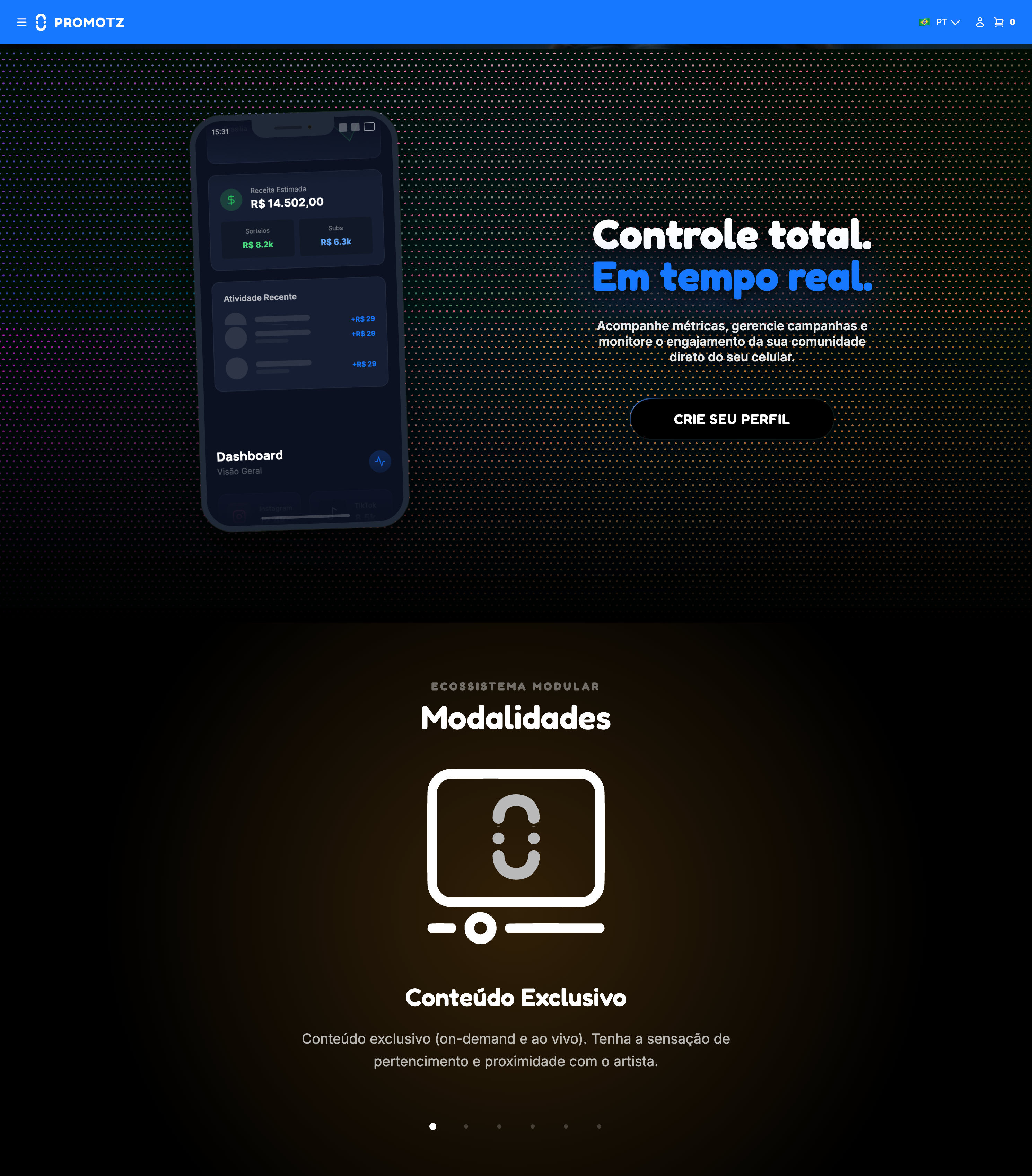
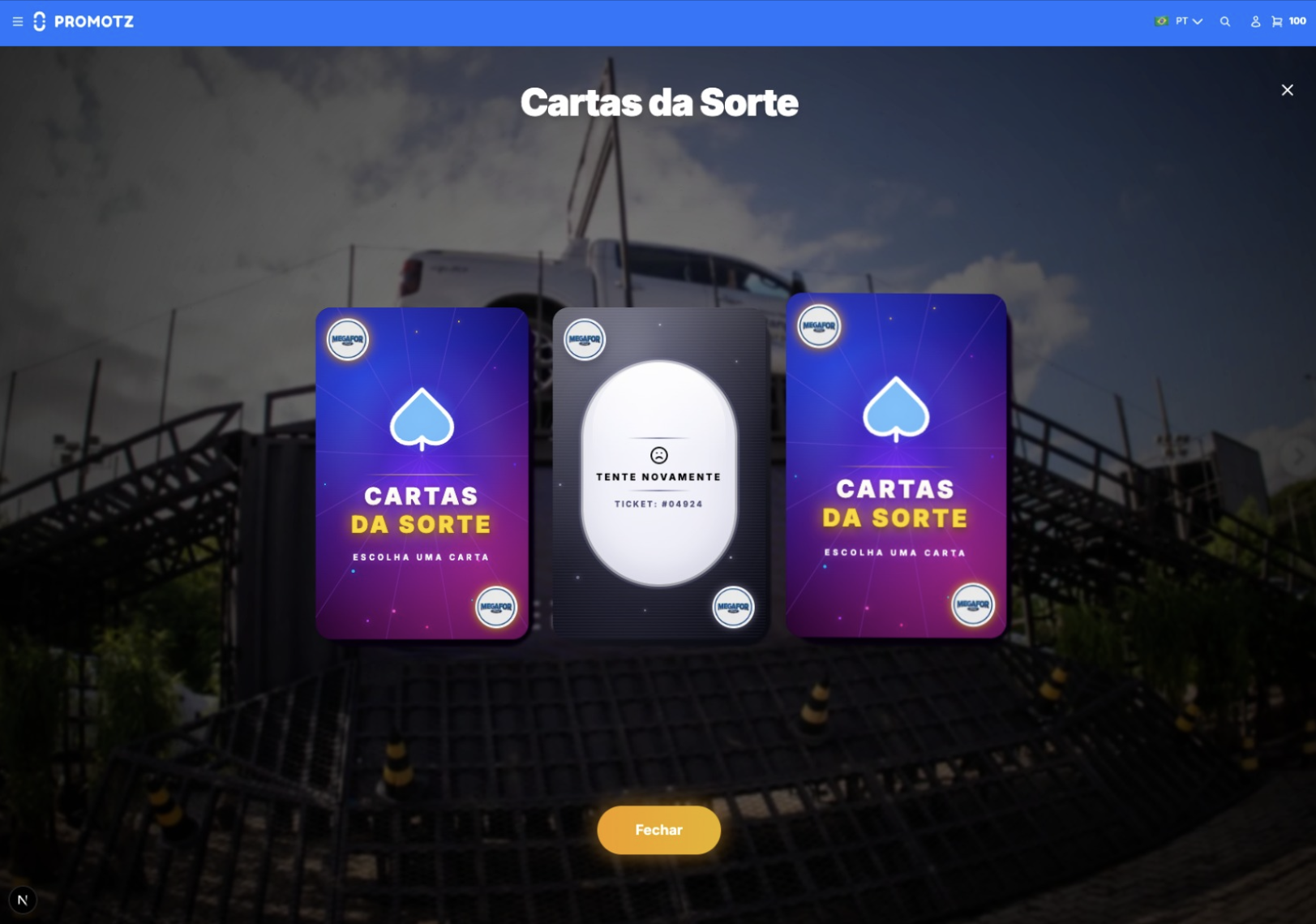
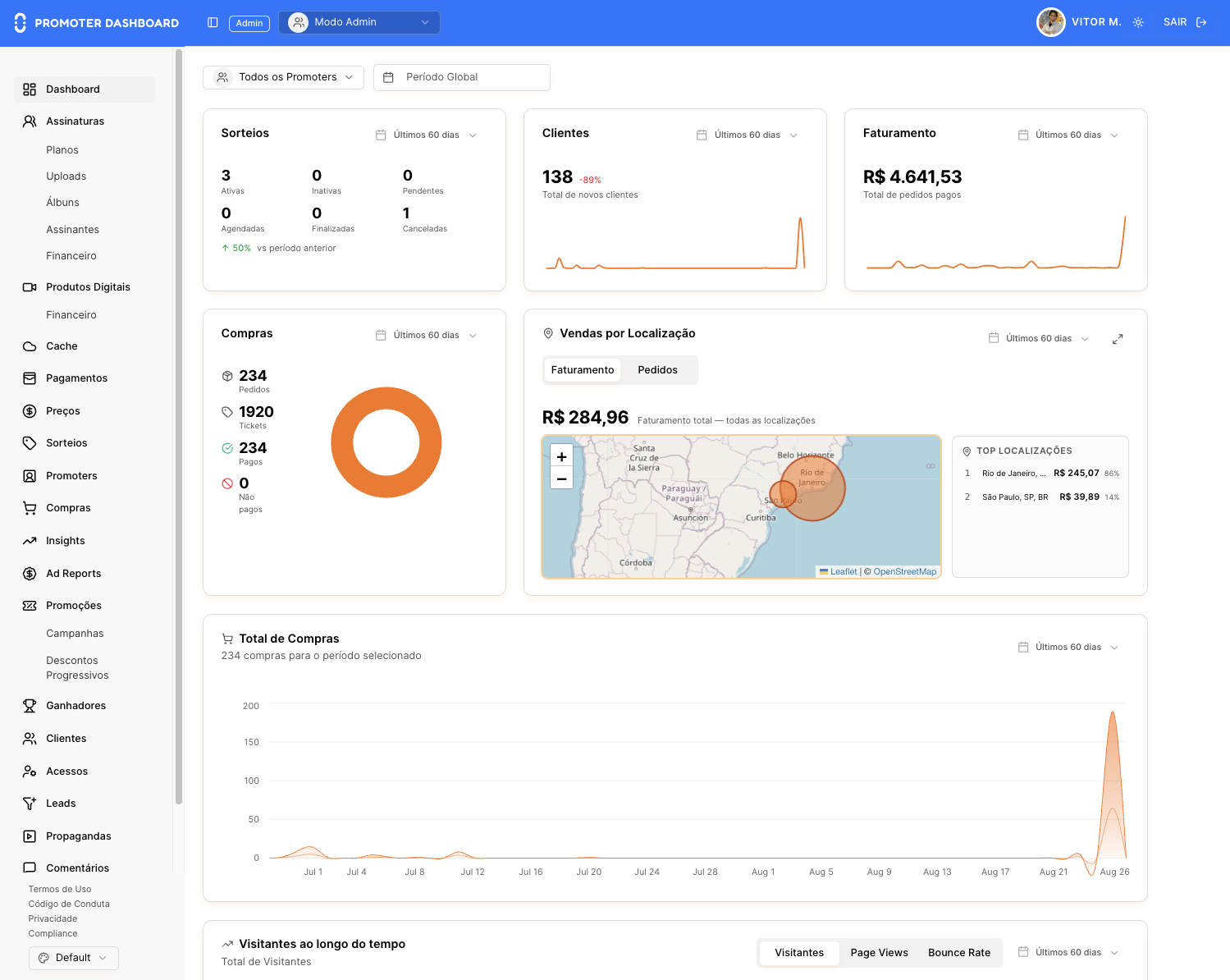
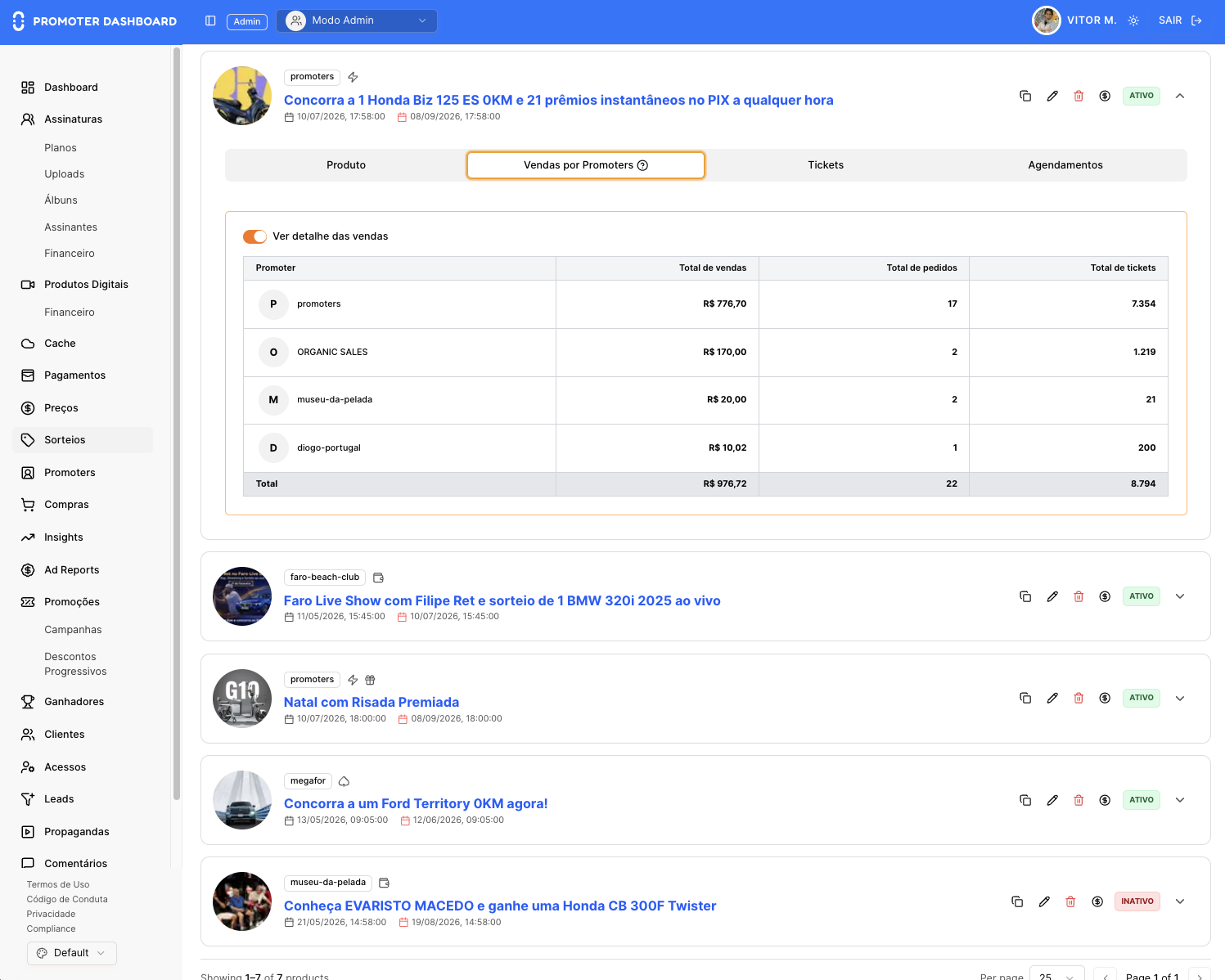
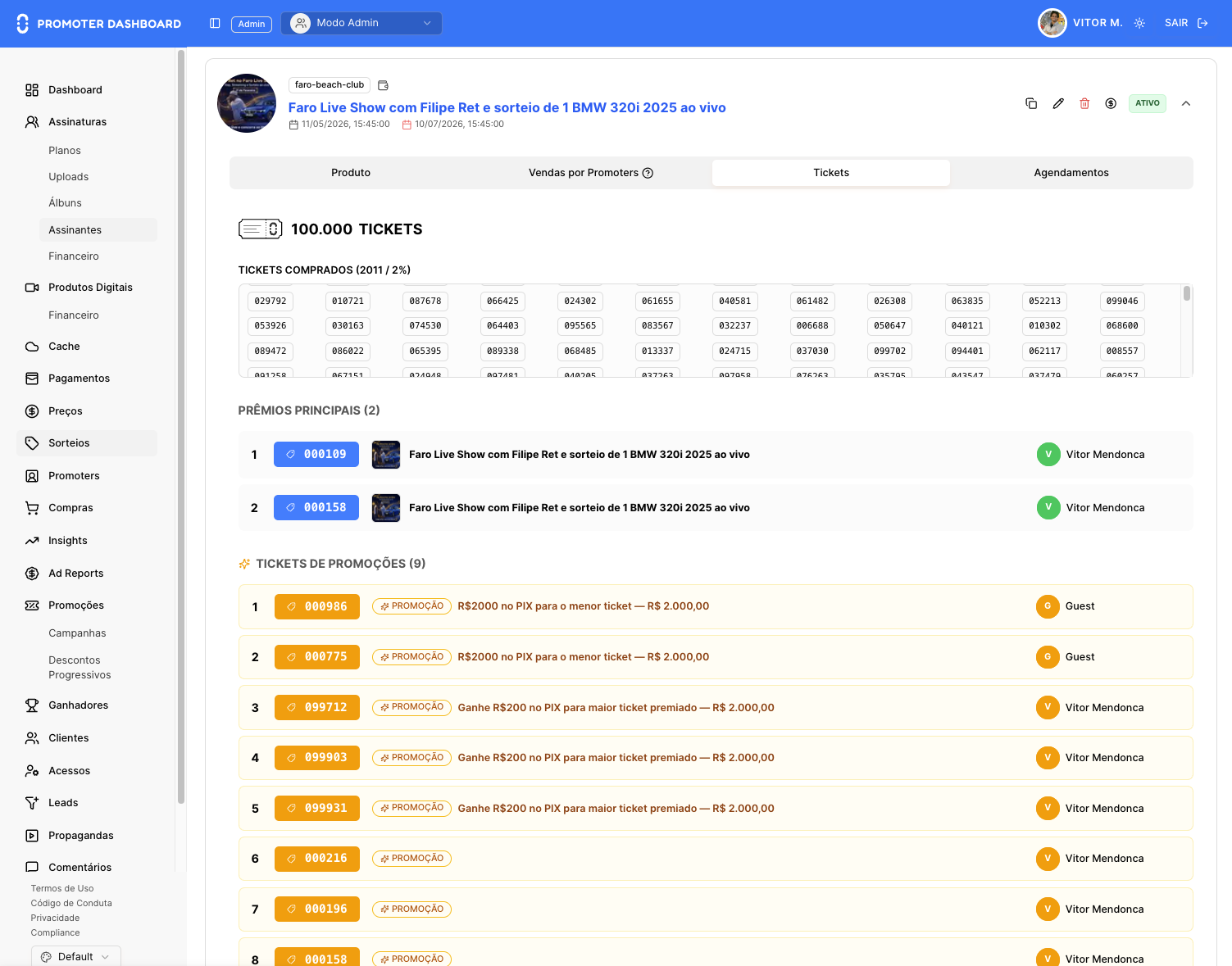
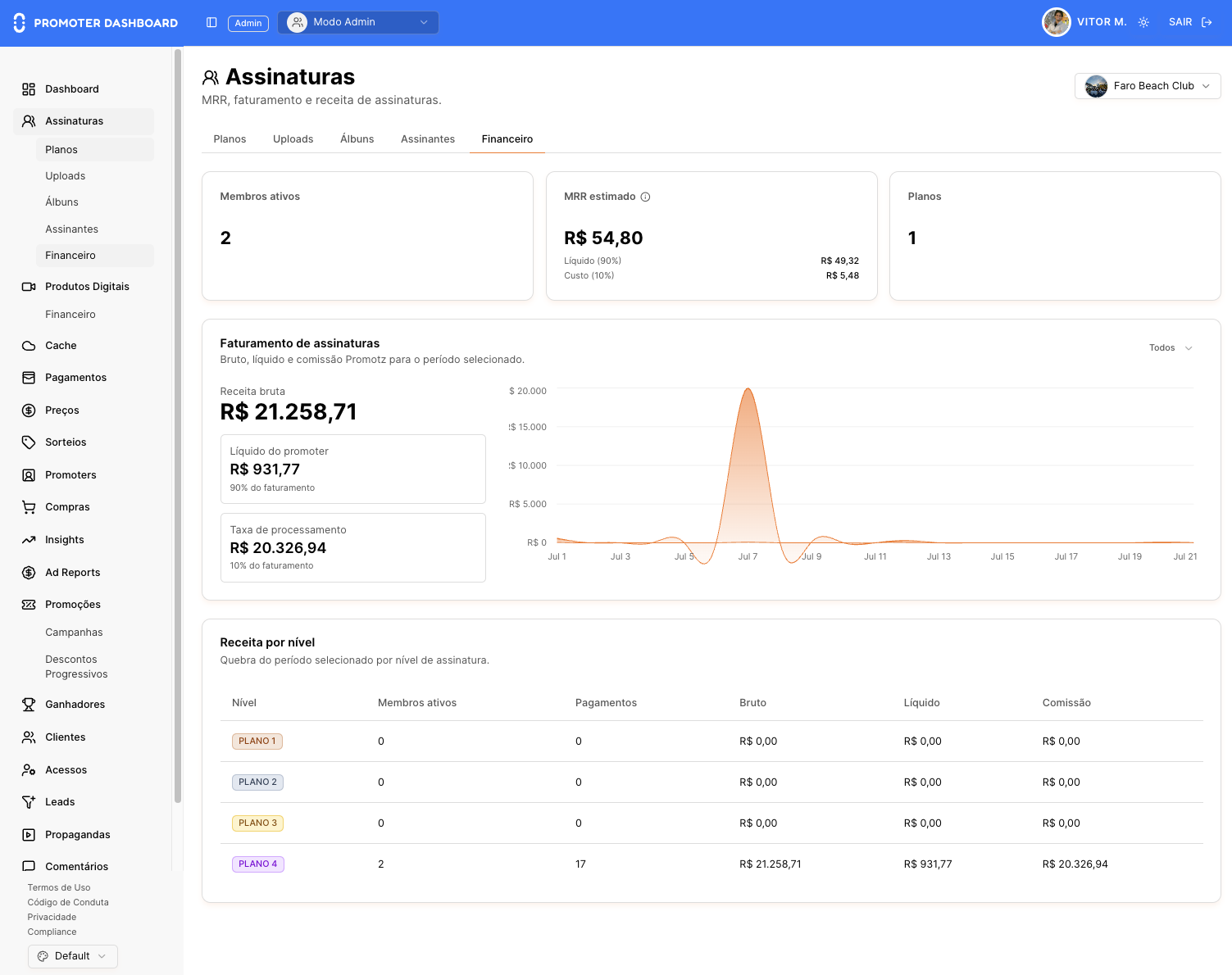
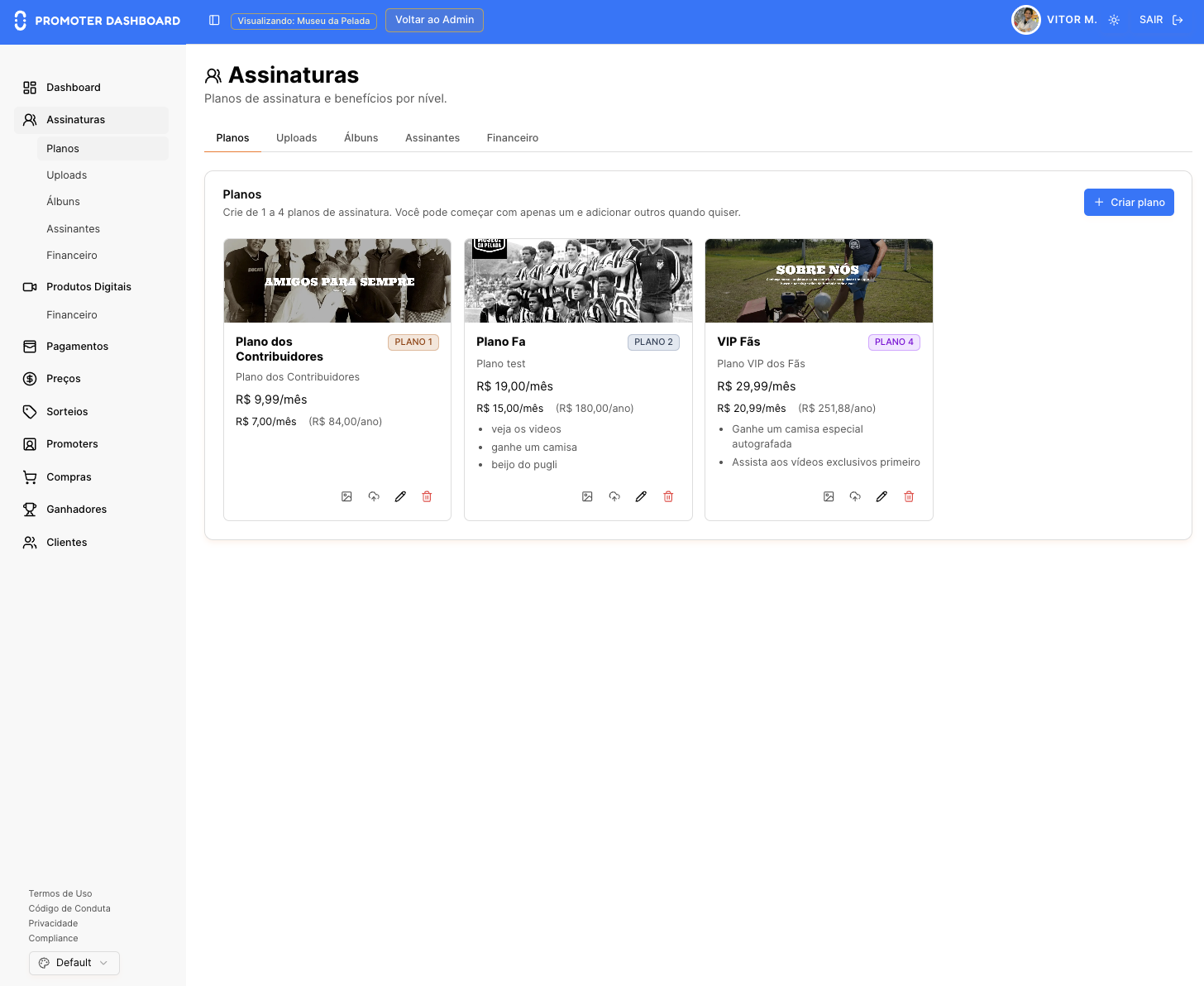
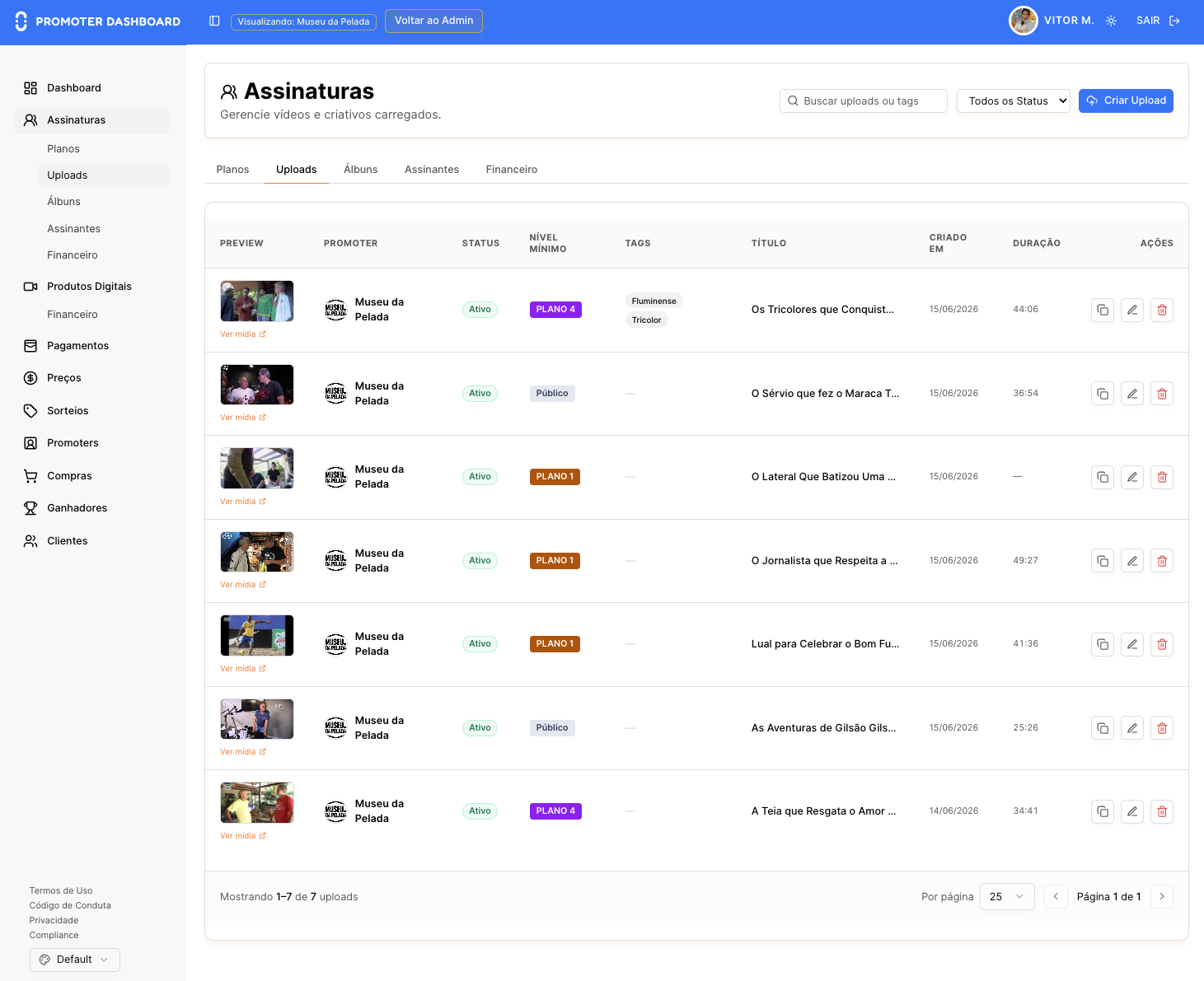
Software-product company building AI-backed editorial intelligence and creator-commerce platforms. As Solutions Architect and lead engineer, architected and developed Promotz.com and AI News Machine: multi-tenant storefronts, creator dashboards, payments, contextual AI chat, trend analysis, explainable rankings, distributed jobs, and publishing workflows.
- Architected and led the development of multi-tenant platforms, including Promotz.com and AI News Machine, using Next.js, React, TypeScript, Node.js, MedusaJS v2, PostgreSQL, MongoDB, Redis, and event-driven architecture across customer storefronts, creator dashboards, and backend systems.
- Designed cloud infrastructure and scaling architectures using AWS EC2, ECS/Fargate, Aurora PostgreSQL, RDS Proxy, S3, SQS, Lambda, and API Gateway; Cloudflare WAF/DDoS Protection, API Shield, and Bot Management; and Docker, Dokploy, and CI/CD tooling.
- Led platform strategy across subscriptions, live streaming, promotional campaigns, digital raffles, auctions, and affiliate networks, coordinating architecture, security, scalability, and compliance.
- Directed applied-AI work spanning LLM and multi-agent workflows, retrieval over vector search, personalization concepts, model evaluation, human review, and production guardrails.
- Used Cursor, OpenAI Codex, Claude, Gemini, and GitHub Copilot in an AI-assisted engineering workflow, with automated review and testing and attention to Core Web Vitals, technical SEO, and accessibility.
Promotz.com is a creator-commerce platform built with MedusaJS v2, Next.js, React, PostgreSQL, and AWS S3 for auditable prize draws, recurring memberships, affiliate storefronts, commissions, payouts, digital products, and secure media delivery.
- Built Promotz.com from the ground up, using MedusaJS v2, Next.js, React, PostgreSQL, and AWS S3 to deliver auditable prize draws, recurring memberships, affiliate storefronts, commissions, payouts, digital products, and secure media delivery.
- Engineered payment processing and transaction workflows integrating Asaas, PagStar, and ONZ for PIX, credit cards, subscriptions, split payments, and webhook reconciliation. Implemented Redis Lua admission controls and PostgreSQL reservations for concurrent ticket allocation.
- Developed a contextual AI chatbot for Promotz.com and WhatsApp, using OpenAI GPT models, retrieval-augmented generation (RAG), OpenAI embeddings, PostgreSQL/pgvector semantic search, and Twilio APIs for FAQ retrieval and human support handoff.
- Architecting and developing Promotz AI Chat V2 using Python, FastAPI, and LangChain, with LangGraph workflow design for intent routing, conversational state, knowledge retrieval, authorized commerce tools, and human escalation. Applying Model Context Protocol (MCP) tooling to support development and integration workflows.
- Architected a shared data platform spanning three applications, 35 custom domain modules, and 16 scheduled pipelines, using bounded contexts, cross-module links, and workflow orchestration to let revenue engines evolve independently.
- Set platform engineering standards around workflow-based mutations, idempotency, architecture decisions, layered testing, and machine-readable subsystem documentation.
- Replaced a serialized reservation lock that measured about 20 purchases per minute on one hot raffle with an atomic Redis Lua capacity gate backed by PostgreSQL reservations. Designed a staged validation target of 1K, 10K, 40K, and 80K purchases per minute with zero oversell and duplicate-allocation gates; the 80K figure is a target, not measured production throughput.
- Designed queue-based payment capture, ticket issuance, notifications, and analytics with retries, dead-letter handling, and worker scaling. The sub-100 ms webhook acknowledgment, sub-2-second p95 checkout, and approximately 133,000 ticket allocations per second are architecture targets.
- Designed a write-heavy data tier with proxy pooling, reporting replicas, partitioned allocation tables, batch claims using SKIP LOCKED, and unique indexes as correctness backstops.
- Designed provider-event idempotency to prevent duplicate, replayed, or out-of-order payment webhooks from granting entitlements or counting revenue twice.
- Designed an immutable earnings ledger with point-in-time commission snapshots, a five-level commission hierarchy, tiered settlement windows, split settlement, and an audited payout workflow.
- Designed reconciliation for missed or delayed payment events, stale-provider polling, refunds and chargebacks, and a bounded 0.5% overflow buffer for late PIX confirmations.
- Designed event-driven revenue aggregation with deduplication and reconciliation across product, currency, partner, sales channel, geography, membership tier, and cohort.
- Developed progressive volume pricing and tier-gated media flows with signed playback access and browser-direct resumable uploads.
- Designed layered protections for payments and access, including tax-ID checks, purchase-limit checkpoints, idempotency keys, bot controls, masked payout data, and role-scoped, organization-scoped access.
- Modernized the commerce core from Medusa v1 to v2 and adopted module-based architecture and a new query graph; planned consolidation around an in-VPC, proxy-pooled database tier.
- Built an AI-assisted engineering practice around versioned agent capabilities, tool integrations, and more than 50 architecture documents used as development context.
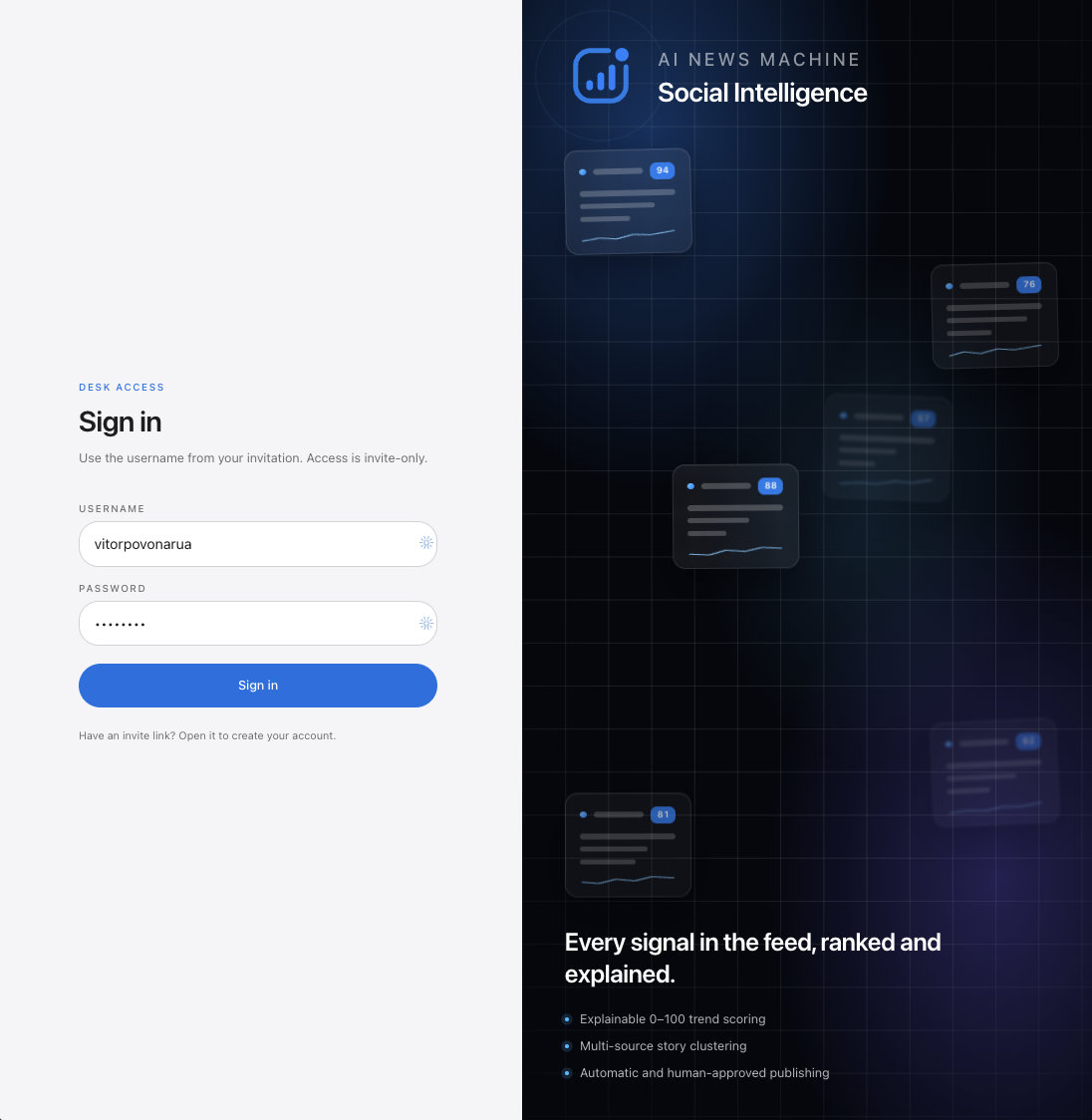
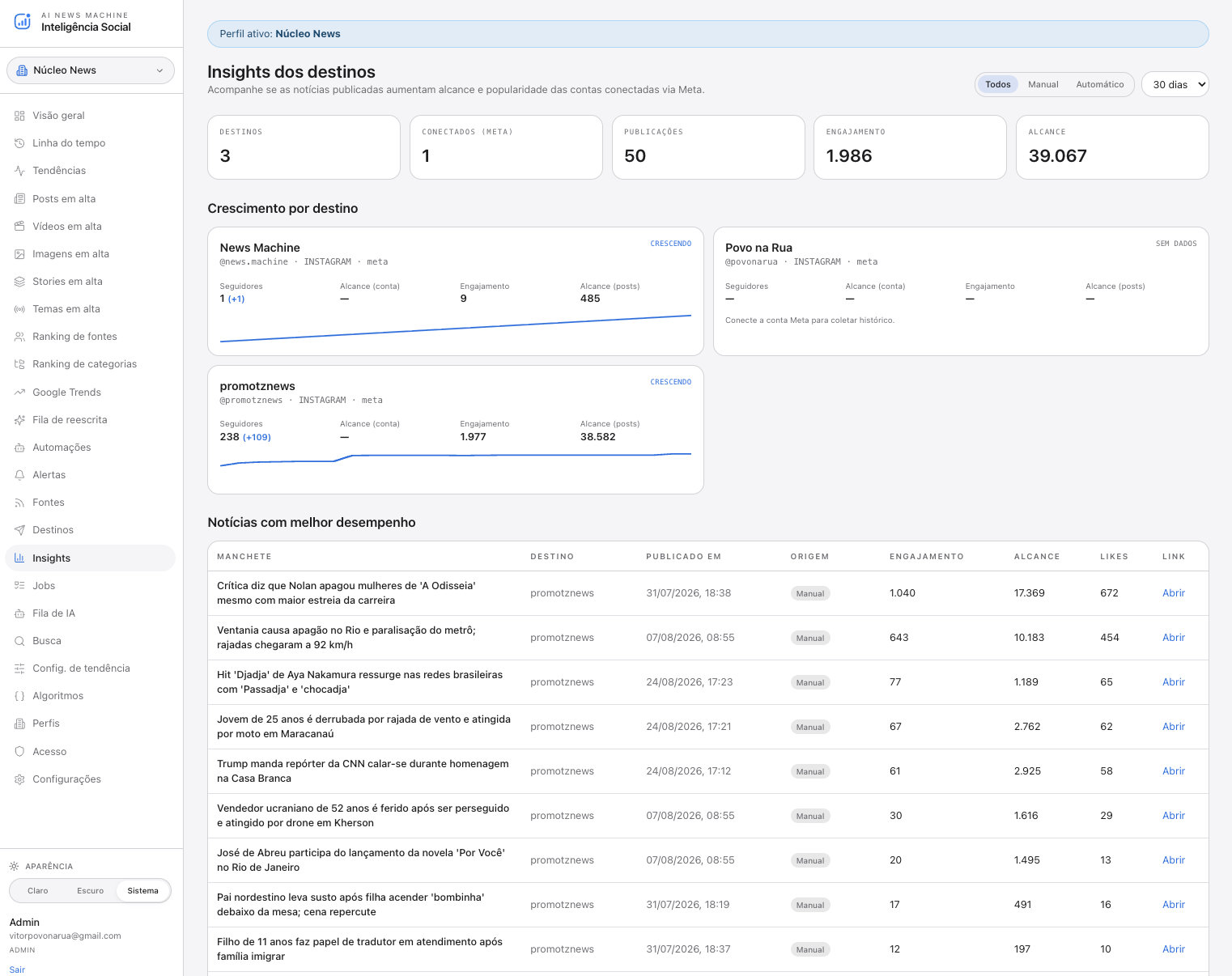
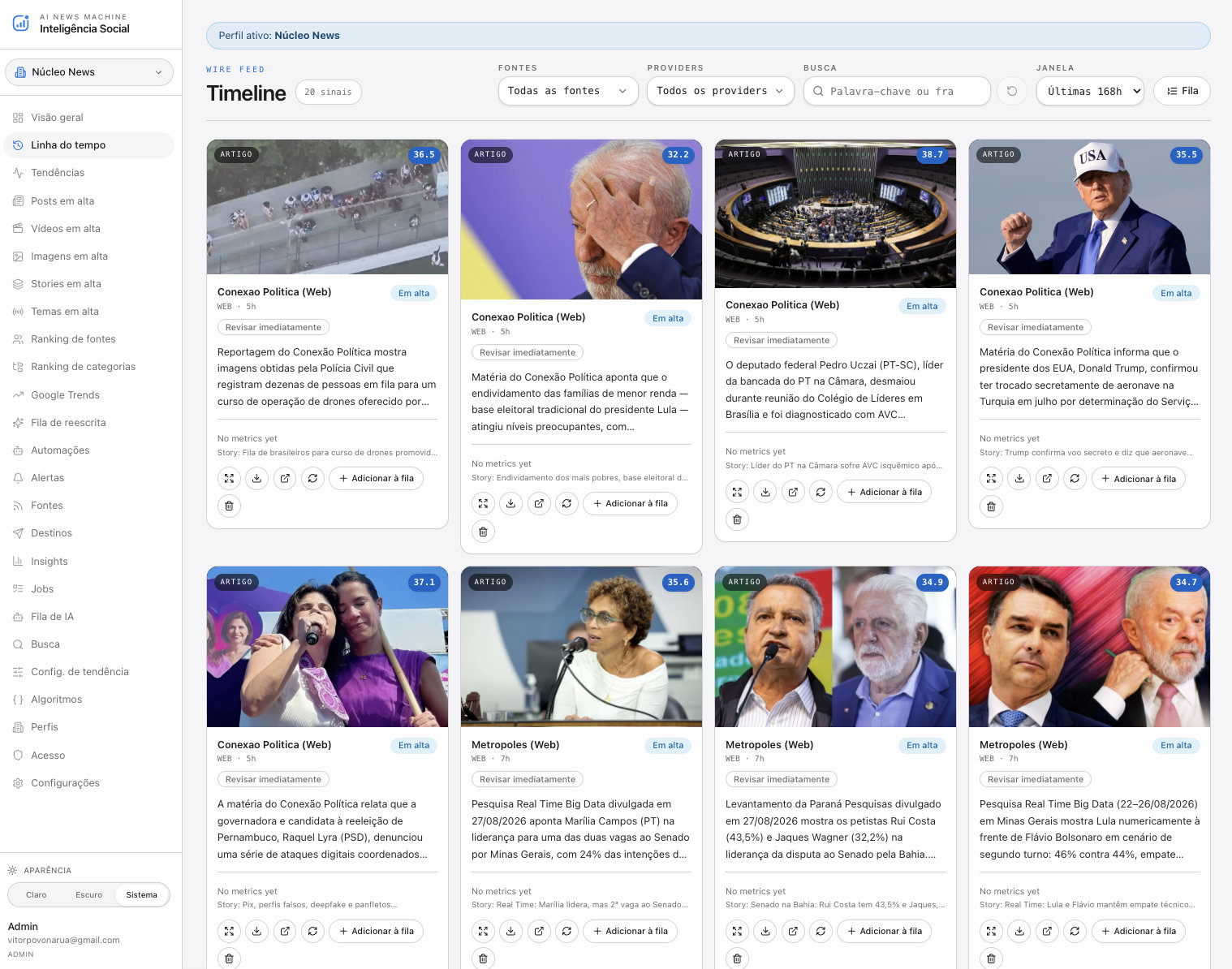
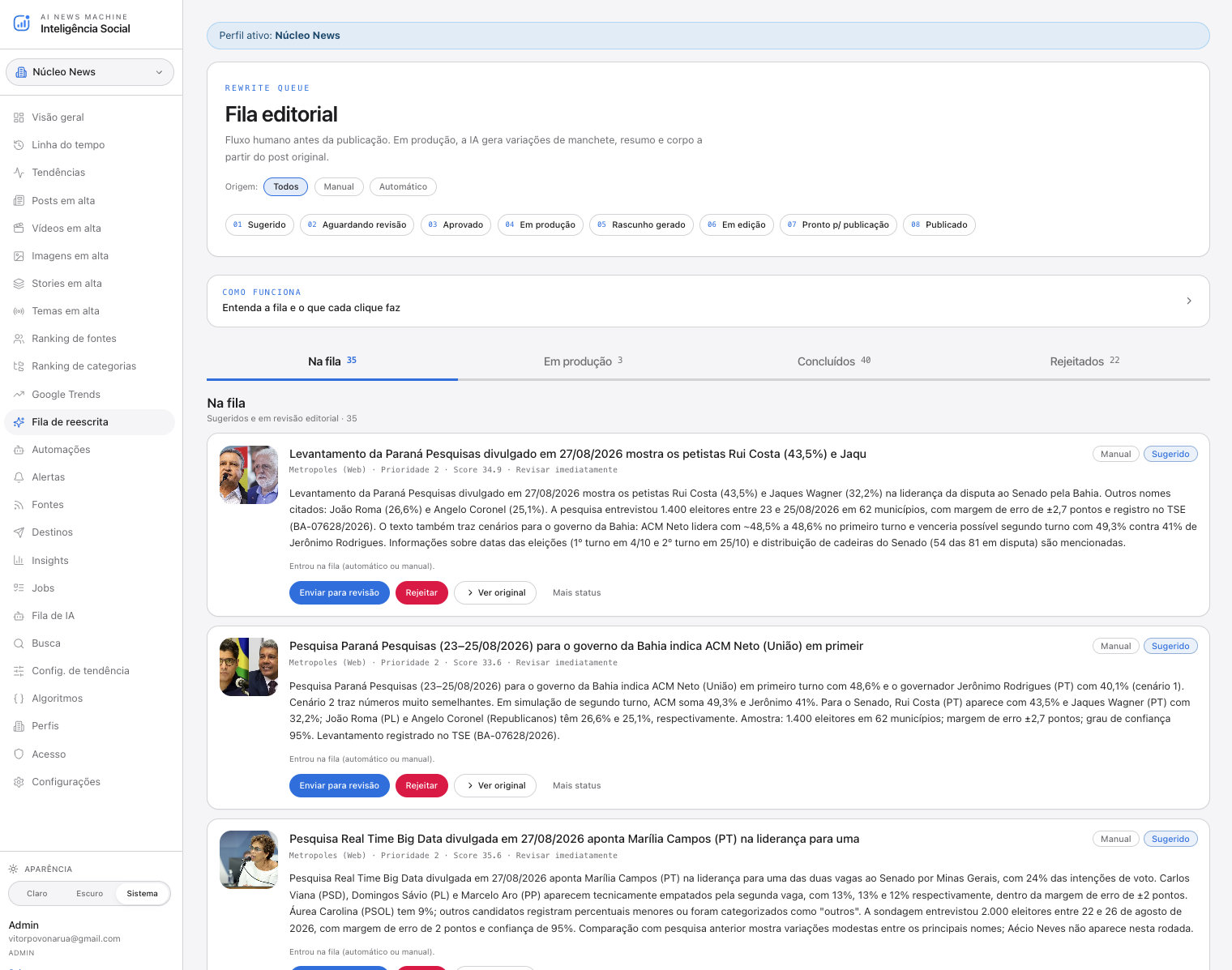
AI News Machine is an editorial intelligence platform that analyzes social media, news, RSS, and search trends for content recommendations and editorial rankings, with AI-assisted generation and publishing workflows.
- Built AI News Machine, an editorial intelligence platform using Next.js, React, TypeScript, Node.js, PostgreSQL/pgvector, Prisma, Redis/BullMQ, and AWS S3 to analyze social media, news, RSS, and search trends for content recommendations and editorial rankings.
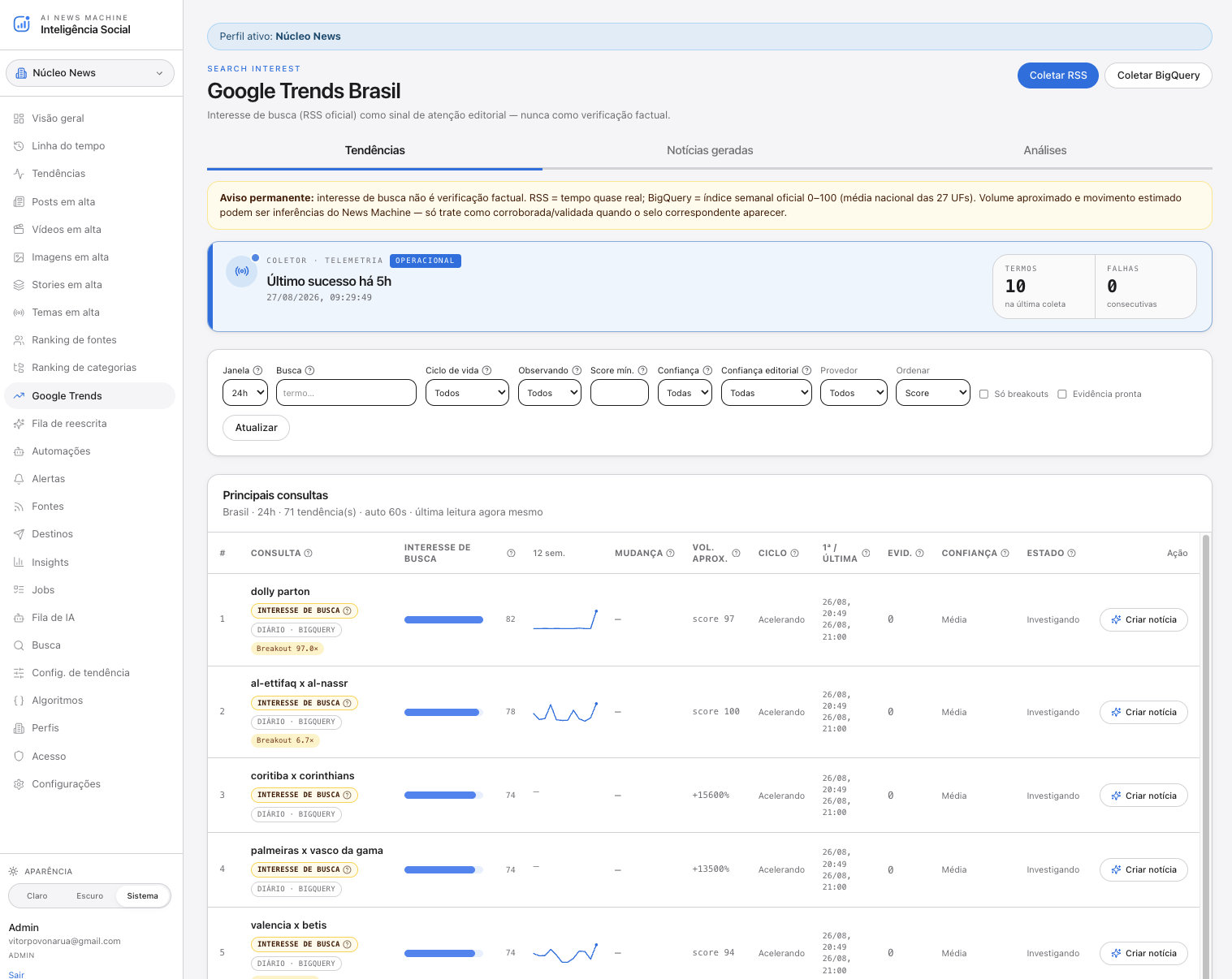
- Designed vendor-agnostic ingestion pipelines using Node.js, TypeScript, Apify, Playwright, RSS/Atom, and Google BigQuery/Google Trends, with incremental collection, adaptive scheduling, deduplication, engagement tracking, and automated cost controls.
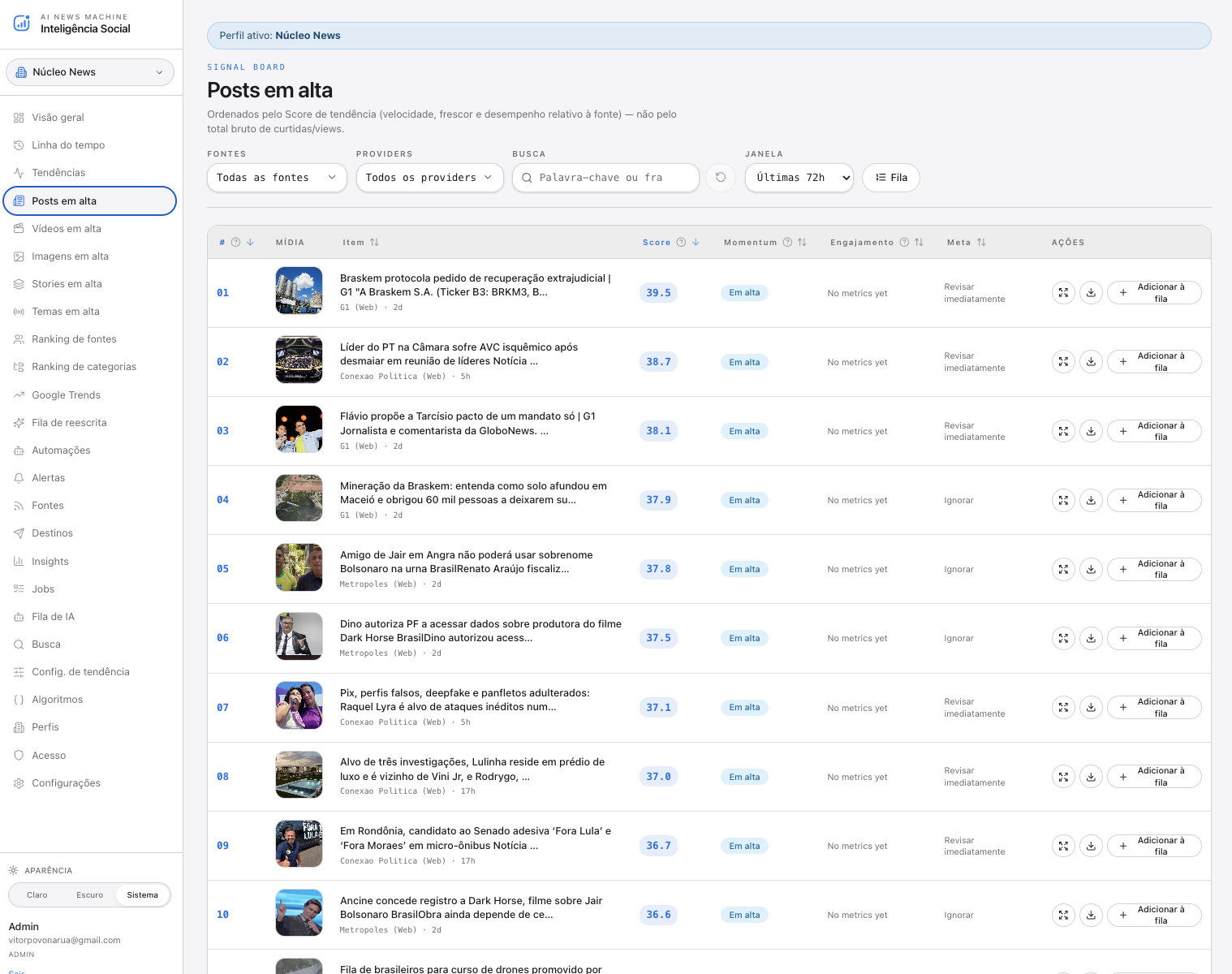
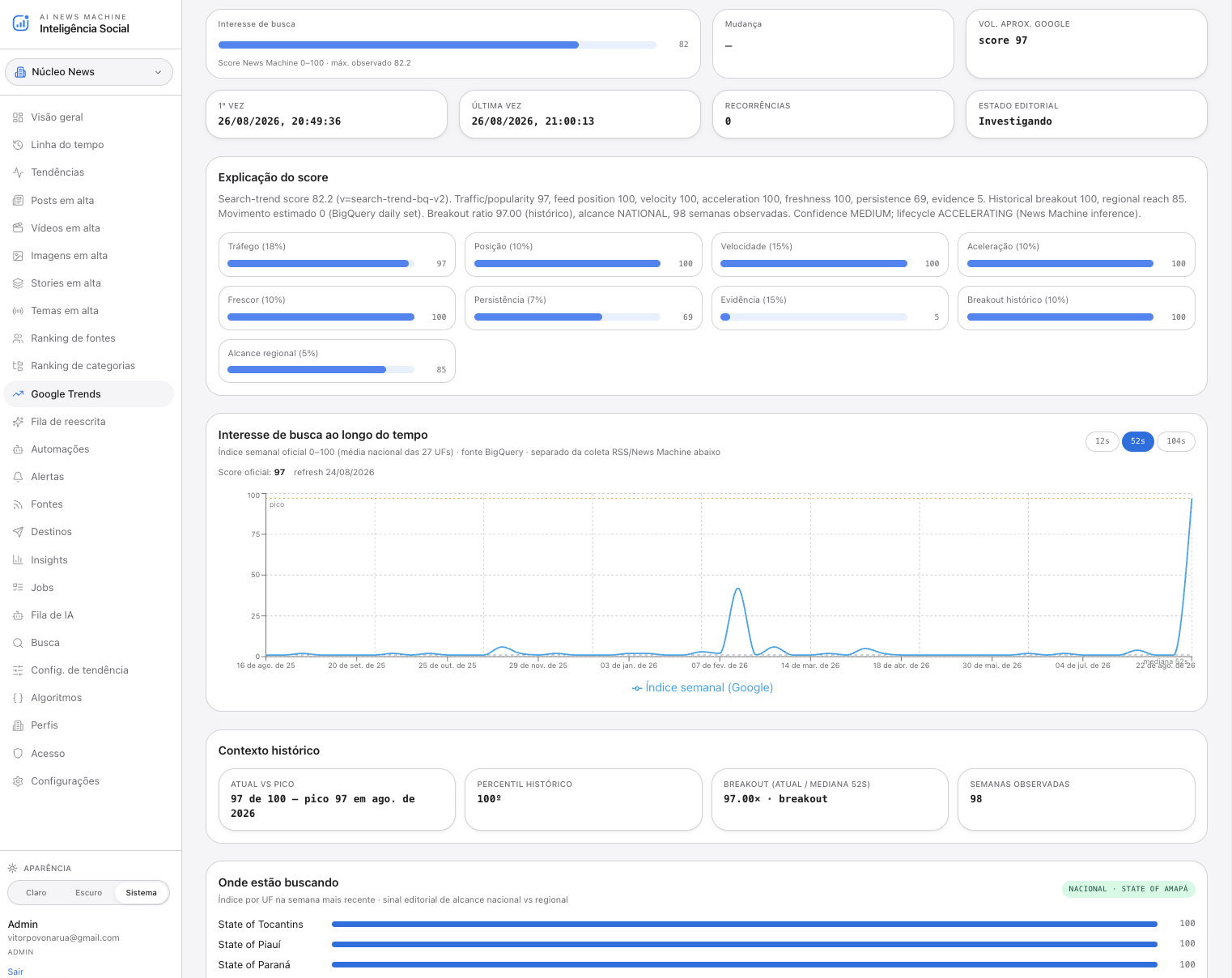
- Engineered AI-driven content analysis and explainable ranking using OpenAI GPT text/vision models, embeddings, PostgreSQL/pgvector, and semantic similarity. Developed versioned 0–100 trend scoring based on engagement, velocity, freshness, coverage, and source authority, with editorial overrides.
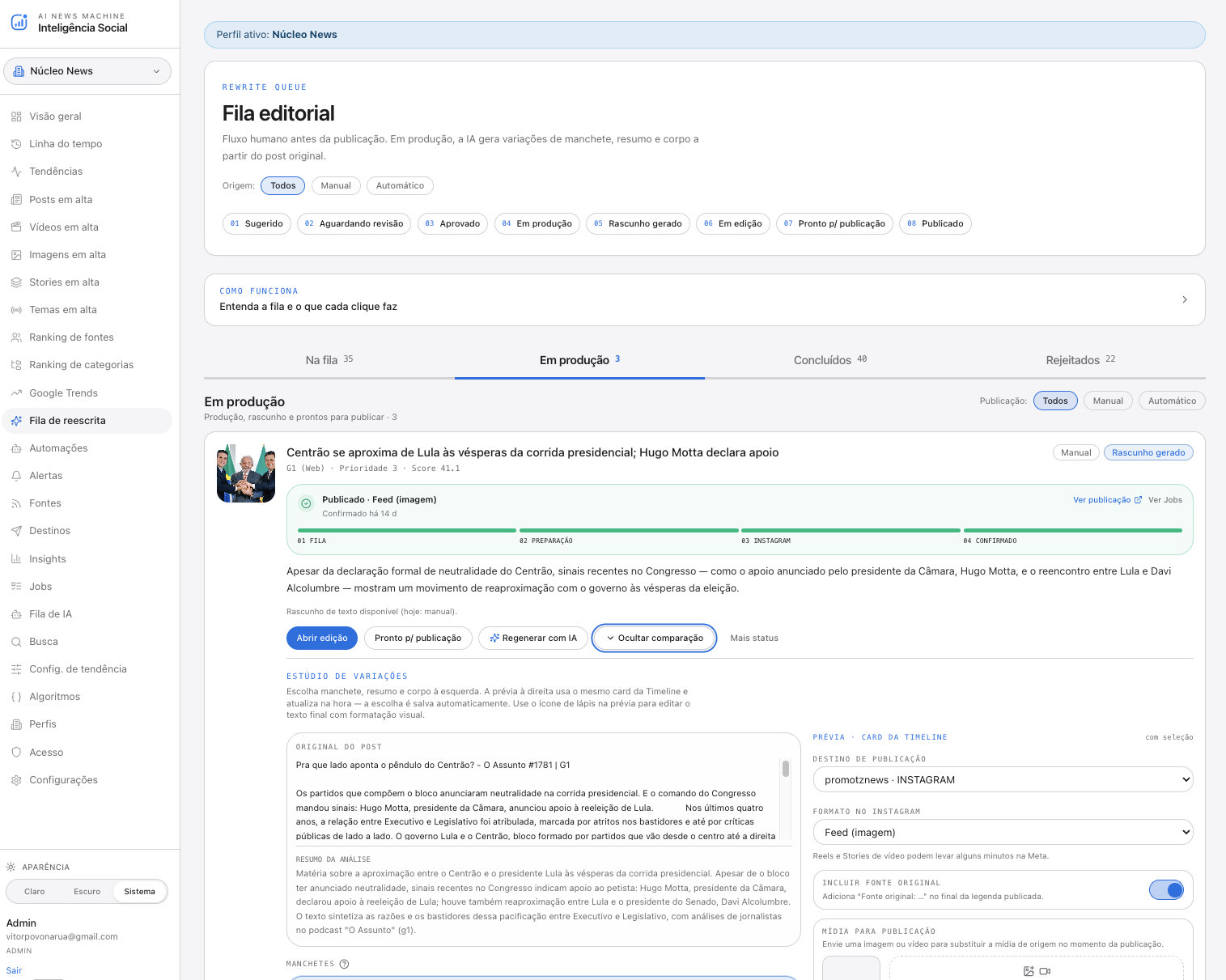
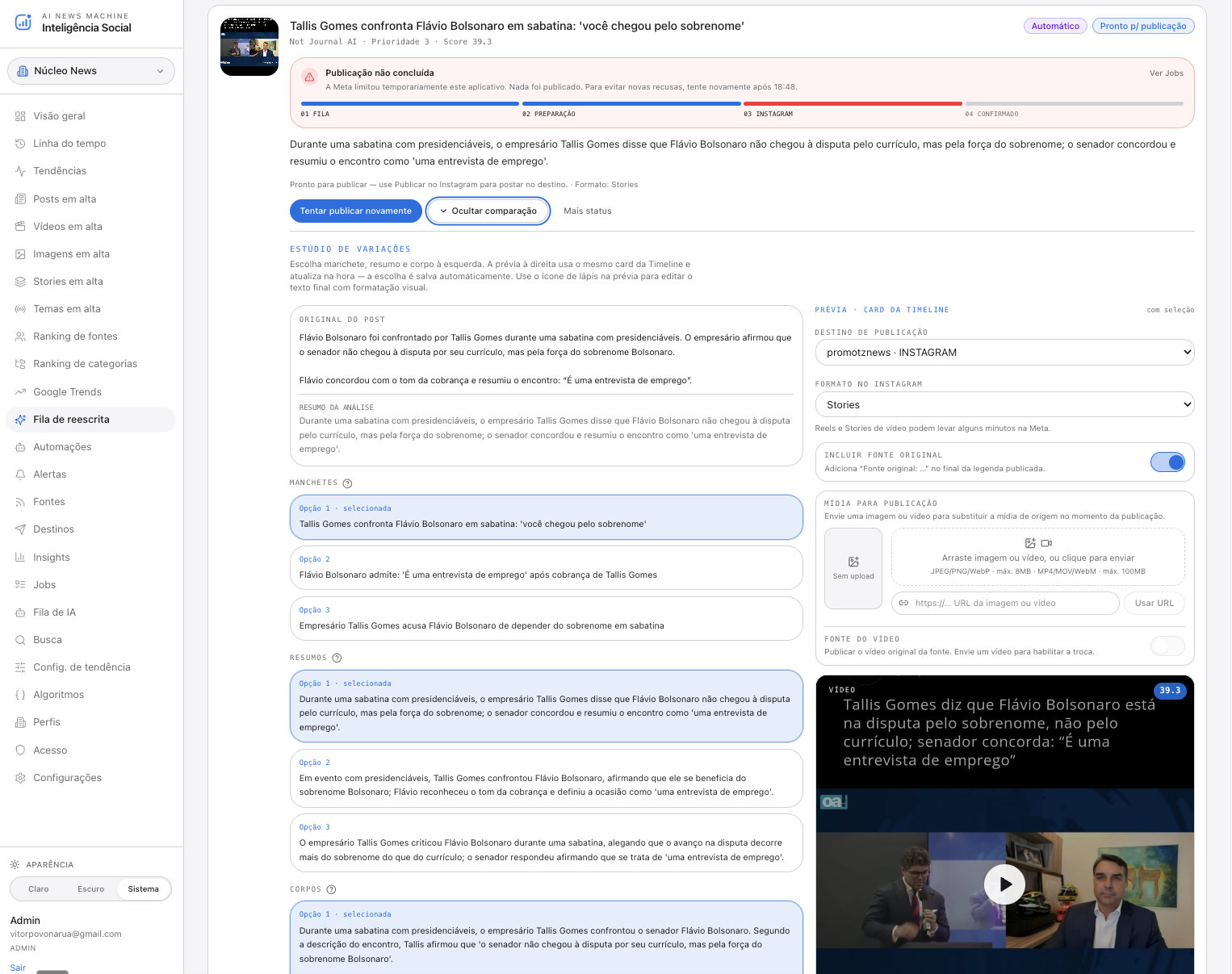
- Developed AI-assisted content generation and publishing workflows using OpenAI models, Node.js, TypeScript, and Meta Graph APIs, including editorial rewriting, duplicate detection, and scheduled Instagram Feed, Reels, and Stories publishing with OAuth, token refresh, and human approval.
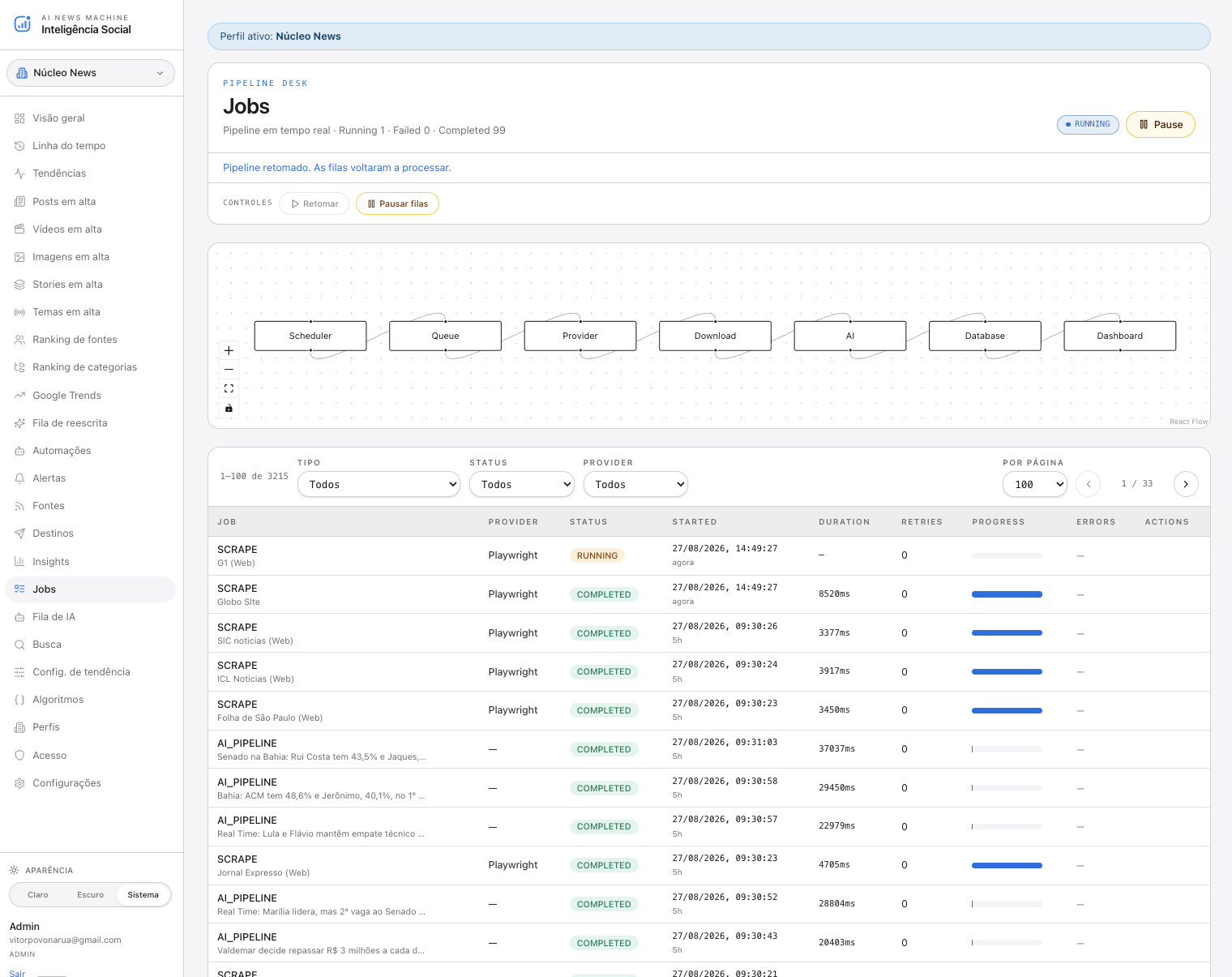
- Engineered 20+ distributed background job queues using Node.js, TypeScript, and Redis/BullMQ, with concurrency controls, retries, cancellation, and centralized scheduling. Implemented Next.js/React operational dashboards, RBAC, audit logging, and automated Vitest testing.
- Designed versioned trend-scoring algorithms with persisted component scores, source-relative baselines, freshness decay, coverage, authority, and editorial overrides.
- Separated Apify, Playwright, RSS, and BigQuery collection behind normalized provider contracts so ranking and publishing logic can work across sources.
- Reduced collection waste with incremental scraping, activity-aware schedules, spend tracking, and budget-based pipeline controls.
- Built story clusters from extracted entities and source coverage, recording first publication and detection, timelines, and editor-controlled merges. The inspected live clustering path does not pass embeddings into the cluster helper.
- Added multi-variant editorial rewrites and recommendation workflows with scheduled publishing, OAuth token refresh, and post-publication insights.
- Added idempotent job handling, backoff, a central scheduler, and operational views for job control, source health, and collection costs.
- Implemented role and profile access controls, invitation-based onboarding, AES-256-GCM encryption for social credentials, signed webhooks, audit logging, and human approval for external publishing.
- Kept scoring, archival-policy, and scheduling logic in testable packages with deterministic Vitest coverage independent of live provider calls.